

One of the hardest things about marketing is knowing whether it's actually working.
You spend money on advertising. You show up at community events. You post on social media. You educate your audience. You build relationships. You make your brand visible.
And then someone asks the dreaded question:
“So… what did we get from it?”
If the only answer you're looking for is a sale, you may be measuring marketing too soon.
I've learned that marketing doesn't always work like a vending machine where you put in a dollar and immediately get something back. Some of the most important results happen before the phone rings, before the form is filled out, and before the customer ever walks through your door.
That's why I want to look at ROI a little differently.
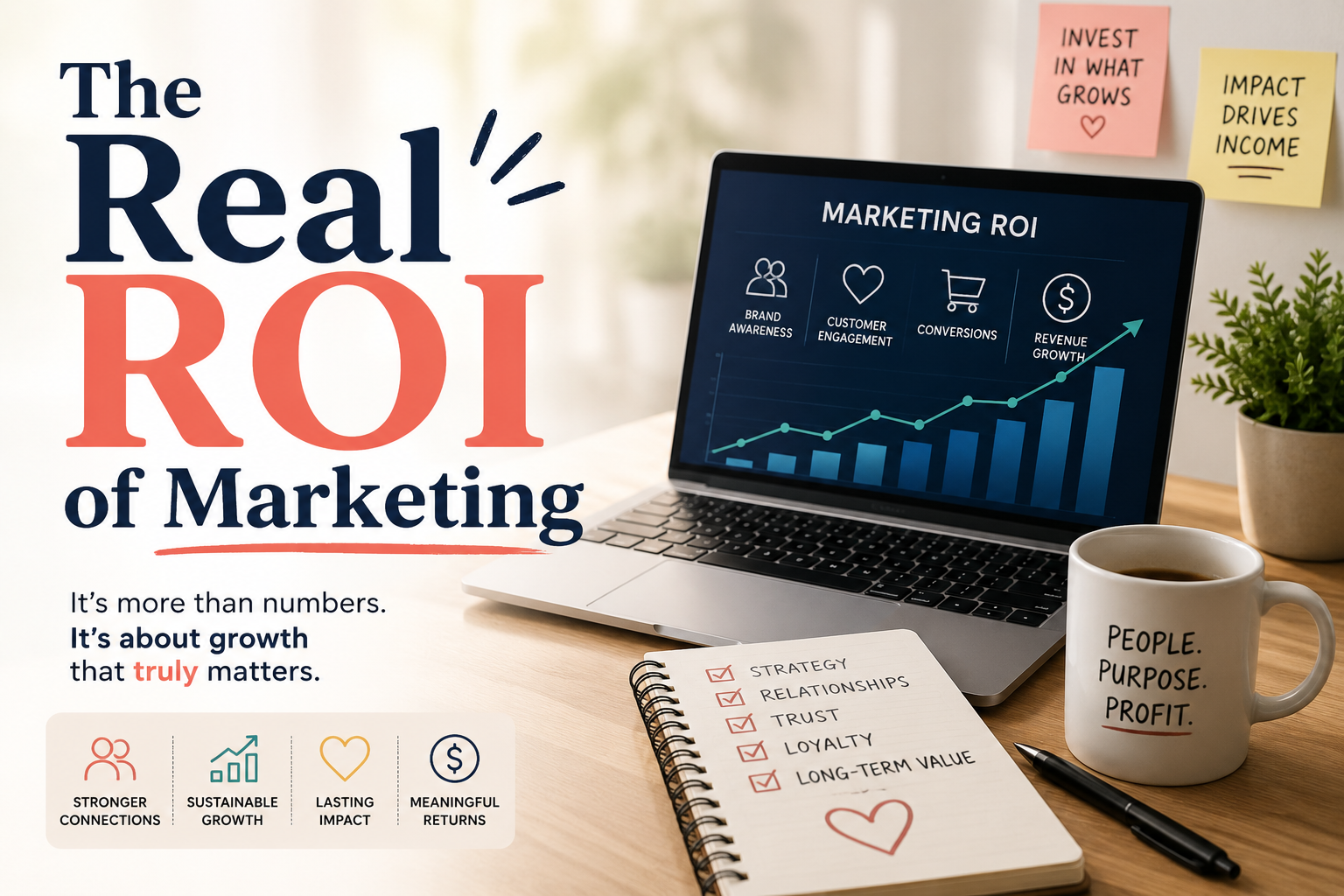
ROI isn't only about return on investment. It's also about return on impact: the awareness, engagement, trust, recognition, and demand you're building before those efforts eventually turn into leads, sales, and revenue.
And once you understand that, marketing becomes a whole lot less stressful.
Why You Shouldn't Measure Marketing Only by Sales
If you advertise today and don't get a customer tomorrow, does that mean the marketing failed?
Not necessarily.
One of the biggest mistakes I see is expecting marketing to produce an immediate transaction every time. That's especially dangerous for businesses where customers take time to make a decision.
Think about a dentist.
If a new customer becomes a patient and eventually brings their family into the practice, the value of that relationship isn't limited to the first appointment.
Or think about a hairstylist.
If someone moves into a new community and needs to find a new stylist, the first visit could potentially become a long-term relationship.
That's why I want business owners to understand the lifetime value of a customer.
If you don't know what a customer could be worth to your business over the entire relationship, you may be making marketing decisions based on a much smaller number than the opportunity actually represents.
And that can make good marketing look expensive when it may actually be a smart investment.
What Is Return on Impact?
When I talk about return on impact, I'm talking about the full effect your marketing has on your business — not just the final transaction.
That includes things like:
Are people seeing you?
Are they recognizing your name?
Are they engaging with your content?
Are they visiting your website?
Are they talking about you?
Are they sharing your content?
Are they beginning to trust you?
Are you becoming the business they remember when they're ready to buy?
Those things may not immediately show up in your cash register.
But they matter.
In my conversation with Trent, we talked about how businesses can get caught up in what he called the “spray and pray” approach: put marketing out there, spend the money, and hope something comes back.
I don't want you to market that way.
I want you to understand what you're building.
What Are Leading Indicators in Marketing?
Leading indicators are the early signals that tell you your marketing is moving in the right direction before the final sale happens.
These are the things you should watch while your brand is being built.
Are people seeing you?
If yes, you're building awareness.
Are people liking, commenting, clicking, sharing, or saving your content?
Those are signs of engagement.
Are people starting to recognize your name?
Maybe you're hearing things like:
“Oh, I've heard of you.”
Or:
“I've seen you guys everywhere.”
That's a signal too.
Are people visiting your website?
That matters because customers often don't buy when you're ready for them to buy. They buy when they're ready.
Your website gives them a place to learn more, look around, read your story, see what other customers say, and continue building trust on their own time.
Those are all pieces of the customer journey.
Why Your Website Is Part of the Marketing Journey
I love the way this connects to what we talked about as the “messy middle.”
Someone may become aware of your business long before they're ready to buy.
They might see your name at a local event.
Then they see a social post.
Then someone mentions you.
Then they visit your website.
Then they read your reviews.
Then they follow you for a few months.
Then, finally, something happens in their life that makes them need what you offer.
The customer may have been building trust with you long before you ever knew they were a potential customer.
That's why I don't want business owners to look at a sale and assume the sale is where the story began.
It usually isn't.
What Are Lagging Indicators?
Lagging indicators are the results that happen later in the marketing process — things like leads, calls, sales, and revenue.
And yes, we absolutely need to measure those.
The mistake is expecting the lagging indicators to happen without doing the work that creates the leading indicators.
You can't skip the beginning and demand the ending.
If people don't know who you are, don't trust you, don't recognize your brand, and aren't engaging with anything you're doing, you can't simply expect them to suddenly become customers.
Marketing builds demand.
Sales captures that demand.
That distinction is incredibly important.
What Happens If You Quit Marketing Too Early?
This is where I think many businesses get into trouble.
They start marketing.
They don't see enough sales immediately.
They decide it's not working.
So they stop.
But what if the early signs were actually telling you that something was working?
Maybe more people were seeing your business.
Maybe your engagement was increasing.
Maybe people were visiting your website.
Maybe your name was becoming familiar.
Maybe customers were beginning to recognize you in the community.
Those are not meaningless numbers.
They're signals.
And marketing often has a cumulative, layered effect.
One exposure may not do much.
Another exposure adds something.
A conversation adds something.
A social post adds something.
A recommendation adds something.
A website visit adds something.
Over time, those experiences can build familiarity and trust.
Then, when the customer is finally ready, you're not a stranger anymore.
What Does Engagement Have to Do With ROI?
This is where return on engagement becomes useful.
Engagement includes the ways people interact with your brand: comments, shares, tags, saves, conversations, recommendations, and other forms of participation.
These can be called “soft metrics,” but soft does not mean unimportant.
One example from our conversation really stuck with me.
If a local influencer shares something about your business and you and your employees share that post too, you're potentially exposing that content to audiences beyond the people who already follow your business.
The social platforms are also paying attention to engagement. When people share, save, comment on, and interact with content, those actions can influence how the platform distributes that content.
That doesn't mean every post will suddenly go viral.
It means engagement is part of the ecosystem.
And there is another piece here that matters:
Be generous.
Instead of constantly talking about yourself, talk about the people around you.
Take a picture with another business owner.
Celebrate what they're doing.
Tag them.
Share their work.
Tell people why you enjoyed meeting them.
Give social love.
That's not just being nice.
It can also help you become part of the community you're trying to serve.
Why the Lifetime Value of a Customer Matters
Here's where I want you to get out your calculator.
If you don't know the lifetime value of your customer, figure it out.
Ask yourself:
What is one customer actually worth to my business over the length of our relationship?
Don't automatically stop at the first purchase.
Think about repeat business.
Think about referrals.
Think about additional services.
Think about family members when that's relevant to your business.
Think about how long customers typically stay.
Once you understand that number, you can make smarter decisions about what you're willing to invest to acquire and serve that customer.
A marketing investment might look very different when you're comparing it with one transaction versus a relationship that could continue for years.
That's why attribution matters too.
Don't just ask:
“How much did I make this month?”
Ask:
“What did this marketing effort help create over the period of time that this customer relationship is valuable?”
That is a much bigger picture.
What Is Return on Objectives?
There's another layer I want business owners to think about: return on objectives.
In simple terms, ask:
Did my marketing help me accomplish what I actually wanted to accomplish?
Maybe your goal is to reach people in a particular neighborhood.
Maybe you want more customers who fit a certain profile.
Maybe you want to reach people who have recently moved into the area.
Maybe your objective is to become better known in a particular community.
Those are business objectives.
And your marketing should have a reason behind it.
This is where I come back to the four Ms we've discussed:
Market. Medium. Message. Moment.
Who are you trying to reach?
Where are you reaching them?
What are you saying?
And is this the right moment for that message?
When those pieces line up, you're not just spending money and hoping.
You're making a strategic decision.
How Do You Know If Your Marketing Is Working?
Start by separating your leading indicators from your lagging indicators.
Leading indicators
Look for:
Brand awareness
Visibility
Engagement
Name recognition
Website visits
Social interaction
People talking about your business
Signs that people are beginning to recognize and trust your brand
Lagging indicators
Then measure:
Leads
Calls
Appointments
Sales
Revenue
Both matter.
But they tell you different things.
Leading indicators tell you whether you're building the conditions for future business. Lagging indicators tell you what those efforts eventually produced.
If you only watch the second list, you can miss everything that made the result possible.
What I Want You to Do With This
If you're wondering whether your marketing is working, don't immediately start cutting things.
First, step back and ask better questions.
1. Define your objective
What exactly are you trying to accomplish?
More customers? More visibility? More business in a specific neighborhood? Greater awareness? A stronger reputation?
You can't measure success if you haven't defined what success means.
2. Calculate customer lifetime value
Look beyond the first transaction.
How long does the average customer stay?
How often do they buy?
What additional opportunities can the relationship create?
That number gives you a much better picture of what a new customer may actually be worth.
3. Track the early signals
Watch your awareness, engagement, website activity, recognition, and conversations.
Don't dismiss these simply because they aren't revenue yet.
4. Give your marketing time to compound
Trust doesn't happen instantly.
People need opportunities to see you, learn about you, experience your brand, and decide whether they believe you can help them.
Don't confuse patience with inaction. Keep measuring and adjusting, but don't assume a lack of immediate sales means nothing is happening.
5. Look at the whole story
When a customer finally buys, ask what happened before the sale.
How did they find you?
Had they seen your content?
Did someone recommend you?
Did they visit your website?
Did they know your name already?
The sale is the final chapter. It isn't necessarily the whole story.
Key Takeaways
Marketing ROI is bigger than immediate sales. Look at the return on the impact your marketing creates along the way.
Leading indicators matter. Awareness, engagement, recognition, and website visits can show that you're building toward future business.
Lagging indicators matter too. Leads, calls, sales, and revenue tell you what eventually happened.
Know your customer's lifetime value. The first transaction may represent only a fraction of the relationship's potential value.
Marketing builds demand; sales captures it. Don't expect the sale before you've built awareness and trust.
Engagement isn't meaningless because it's a soft metric. People sharing, commenting, tagging, and talking about your brand can be valuable signals.
Don't quit before the work has time to compound. Trust and brand awareness are built through repeated, consistent experiences.
The Real Question Isn't “Did I Make a Sale?”
It's “What is my marketing creating?”
That's the question I want more business owners to ask.
Because when you understand the full customer journey, you stop expecting every marketing dollar to produce an immediate transaction.
You start looking for evidence that you're becoming known.
You look for evidence that people are engaging.
You look for evidence that your brand is becoming familiar.
You look for evidence that people are moving closer to trust.
And then, eventually, you look at the sales and revenue those efforts helped create.
That's a much healthier way to think about marketing.
It also makes marketing less stressful.
As Trent and I talked about, once you know who you are, who you serve, what that customer is worth to you, what you can do to serve them, and what you're actually measuring, you don't have to spend all your time second-guessing yourself.
You can stop trying to force an outcome.
You can focus on becoming remarkable because you're serving people well.
And that is the kind of marketing I believe in.
Marketing isn't just about getting someone to buy today. It's about building something they can trust when they're ready.
If you only measure the sale, you'll miss everything that made the sale possible.
And I don't want you to miss that.
▶ Watch the Full Be Locally Loved Conversation With Trent:
🎧 Listen to the Full Be Locally Loved Conversation With Trent: https://open.spotify.com/episode/3Br6uBRN9nLpbZ2WOBS0nB?si=5-Zpwg_fTBOPHlpOKOSPZg